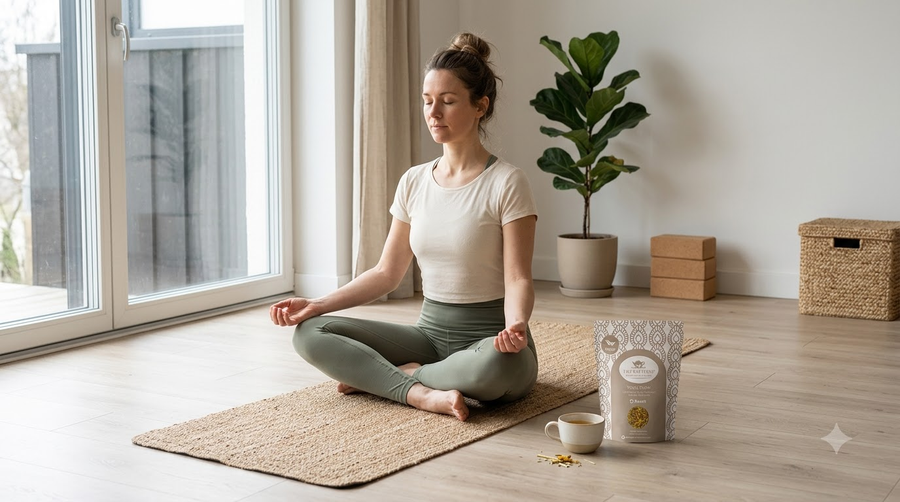
The Silence Reset Ritual
A small practice to help you feel


A small practice to help you feel
A RITUAL TO TRY · 5 minutes · Beginner
This ritual helps people move from overstimulated to clear and calm using mindfulness paired with tea mindfulness.
What do I notice when I stop reaching for stimulation?
MORE RITUALS TO TRY
when you need to reset or need a moment of calm.
Constant stimulation (scrolling, background noise, nonstop information) keeps your nervous system in active processing mode. Over time this creates a quiet, hidden exhaustion. Reducing input—even briefly—helps your body downshift and recover.
Exhaustion doesn’t always come from doing too much.
Sometimes it comes from taking in too much.
Messages. Notifications. News. Background videos. Multiple tabs. Always listening. Always reacting.
Even when you’re sitting still, your nervous system is working.
It’s processing. Filtering. Scanning. Switching attention.
That kind of effort is real — and it adds up.
Constant stimulation can look like “normal life,” but underneath, it often creates:
- Mental fog
- Irritability
- Restlessness
- Difficulty focusing
- Trouble winding down at night
- A feeling of being tired but unable to rest
This is hidden exhaustion: your body is depleted, but your system is still activated.
One of the most effective forms of recovery is not doing *more* self-care.
It’s doing *less input*.
Try creating small pockets of low-stimulation time:
- A quiet cup of tea (no scrolling)
- A short walk without audio
- A few minutes of sitting and looking out the window
- One task done without multitasking
Your nervous system doesn’t need a new hack.
It needs space.
You can’t always change what’s happening around you, but you can change what’s happening inside you. Simple practices—slower breath, grounding your senses, small movement—help your nervous system shift from activation into steadiness, even in the middle of a busy day.
It’s easy to believe your mood is the truth.
That if you feel anxious, you *are* anxious.
If you feel tired, you *are* tired.
If you feel overwhelmed, you *have to* stay overwhelmed until something outside changes.
But your state is a nervous system pattern — and patterns can shift.
A state shift doesn’t mean you suddenly become “happy.”
It means you move from *activated* to *a little more settled*.
From *spinning* to *a little more present*.
From *tight* to *a little more spacious*.
The nervous system responds quickly to signals like:
- Breath (especially a longer exhale)
- Sensory grounding (seeing, feeling, hearing what’s here now)
- Movement (even small)
- Temperature (warm tea, cool water, fresh air)
- Attention (what you focus on expands)
You don’t need a perfect routine. You need a reliable “switch” you can reach for.
With practice, you learn: *I can come back.*
THE SENSORY COMPANION
A cup can accompany the practice, but it isn't required.